The Last Supper
“And as they did eat, he said, “Verily I say unto you, that one of you shall betray me.” And they were exceeding sorrowful, and began every one of them to say unto him, “Lord, is it I?” And he answered and said, “He that dippeth his hand with me in the dish, the same shall betray me. The Son of man goeth as it is written of him: but woe unto that man by whom the Son of man is betrayed! it had been good for that man if he had not been born.” Then Judas, which betrayed him, answered and said, “Master, is it I?” He said unto him, “Thou hast said.” And as they were eating, Jesus took bread, and blessed it, and brake it, and gave it to the disciples, and said, “Take, eat; this is my body.” And he took the cup, and gave thanks, and gave it to them, saying, “Drink ye all of it; for this is my blood of the new testament, which is shed for many for the remission of sins. But I say unto you, I will not drink henceforth of this fruit of the vine, until that day when I drink it new with you in my Father’s kingdom.”” And when they had sung an hymn, they went out into the mount of Olives.” — Matthew 26:21–30 (KJV)
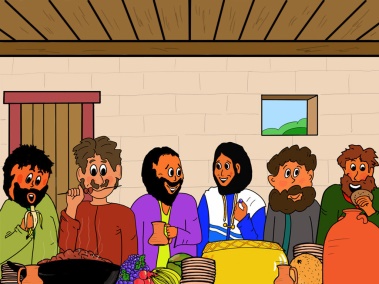
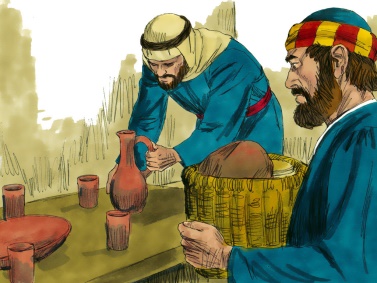
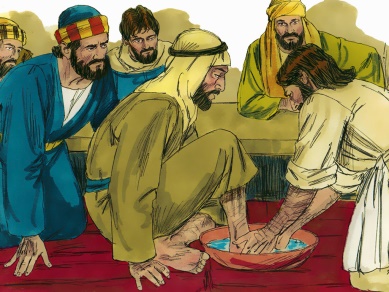
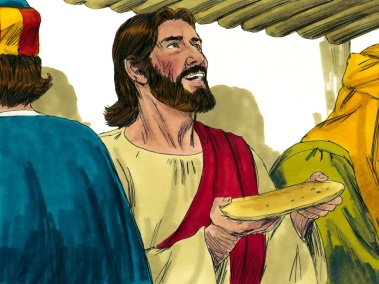
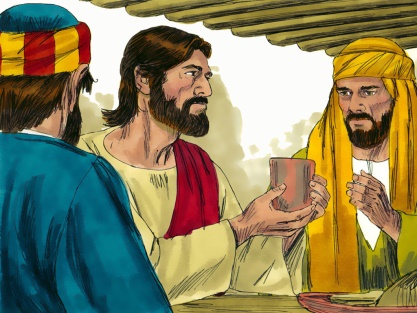
Jesus sent Peter and John ahead of Him to make the necessary preparations. He told them they would meet a man carrying a pitcher of water, and that they should ask him for the use of his guest room, so that Jesus and His disciples could share the Passover meal there. As evening came, and Jesus entered the room for supper, He knew that He would soon give His life to redeem the sins of all the people of the world. This meal is known as the Last Supper, and was deeply eventful, though it left His disciples sad and troubled. Jesus made it plain to them that this was to be His last meal with them — hence the name “Last Supper” — and told them of His coming death, and that one of them would betray Him. He then took bread, broke it, and gave it to His disciples, and afterwards took the cup of wine and asked them to share it among themselves. The bread and the wine are symbols of His body and blood, and to partake of them is to accept Jesus as Lord and Saviour. Known as the Eucharist, or the Lord’s Supper, Christians the world over commemorate this at most Sunday worship.
Prayer, Betrayal, and Arrest at Gethsemane
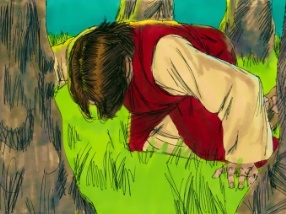
“Then cometh Jesus with them unto a place called Gethsemane, and saith unto the disciples, “Sit ye here, while I go and pray yonder.” And he took with him Peter and the two sons of Zebedee, and began to be sorrowful and very heavy. Then saith he unto them, “My soul is exceeding sorrowful, even unto death: tarry ye here, and watch with me.” And he went a little further, and fell on his face, and prayed, saying, “O my Father, if it be possible, let this cup pass from me: nevertheless not as I will, but as thou wilt.” And he cometh unto the disciples, and findeth them asleep, and saith unto Peter, “What, could ye not watch with me one hour? Watch and pray, that ye enter not into temptation: the spirit indeed is willing, but the flesh is weak.” He went away again the second time, and prayed, saying, “O my Father, if this cup may not pass away from me, except I drink it, thy will be done.” And he came and found them asleep again: for their eyes were heavy. And he left them, and went away again, and prayed the third time, saying the same words. Then cometh he to his disciples, and saith unto them, “Sleep on now, and take your rest: behold, the hour is at hand, and the Son of man is betrayed into the hands of sinners. Rise, let us be going: behold, he is at hand that doth betray me.” And while he yet spake, lo, Judas, one of the twelve, came, and with him a great multitude with swords and staves, from the chief priests and elders of the people. Now he that betrayed him gave them a sign, saying, “Whomsoever I shall kiss, that same is he: hold him fast.” And forthwith he came to Jesus, and said, “Hail, master”; and kissed him. And Jesus said unto him, “Friend, wherefore art thou come?” Then came they, and laid hands on Jesus, and took him.” — Matthew 26:36–50 (KJV)
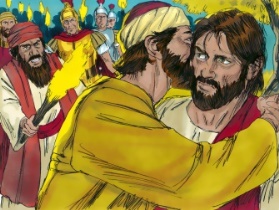

Jesus also spoke at length that night. He gave the remaining eleven disciples a new commandment: “A new commandment I give unto you, That ye love one another; as I have loved you, that ye also love one another.” He told them that He is the true vine, and they are its branches, and that every branch should bear fruit, or else be pruned away.
They then left the room and went into the Garden of Gethsemane to pray. Jesus asked most of the disciples to remain in one place while He went a little further with Peter, James, and John, and even they were asked to keep their distance while He went ahead alone, fell to His knees, and prayed. When He returned to His disciples, He found them asleep. His distress was so great that His sweat became like great drops of blood — a rare condition brought on by extreme anguish, known to medicine as haematidrosis.
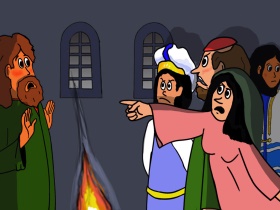
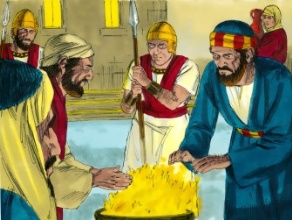
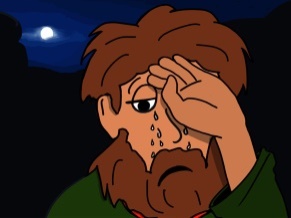
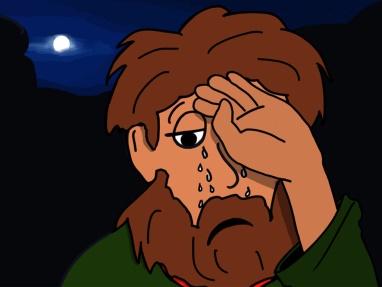
Jesus had also told His disciples that very night that Peter would deny even knowing Him, three times, before the cock crowed the next morning. So it happened: after Jesus was arrested, Peter, standing outside among the crowd, denied Him three times, and at the third denial the cock crowed. Jesus, at that moment, turned and looked at Peter, who remembered what had been foretold, went outside, and wept bitterly (Matthew 26:69-75).
Jesus on Trial — Five Courts and Six Trials
“And they that had laid hold on Jesus led him away to Caiaphas the high priest, where the scribes and the elders were assembled. But Peter followed him afar off unto the high priest’s palace, and went in, and sat with the servants, to see the end. Now the chief priests, and elders, and all the council, sought false witness against Jesus, to put him to death; but found none: yea, though many false witnesses came, yet found they none. At the last came two false witnesses, and said, “This fellow said, I am able to destroy the temple of God, and to build it in three days.” And the high priest arose, and said unto him, “Answerest thou nothing? what is it which these witness against thee?” But Jesus held his peace. And the high priest answered and said unto him, “I adjure thee by the living God, that thou tell us whether thou be the Christ, the Son of God.” Jesus saith unto him, “Thou hast said: nevertheless I say unto you, Hereafter shall ye see the Son of man sitting on the right hand of power, and coming in the clouds of heaven.” Then the high priest rent his clothes, saying, “He hath spoken blasphemy; what further need have we of witnesses? behold, now ye have heard his blasphemy. What think ye?” They answered and said, “He is guilty of death.” Then did they spit in his face, and buffeted him; and others smote him with the palms of their hands, saying, “Prophesy unto us, thou Christ, Who is he that smote thee?”” — Matthew 26:57–68 (KJV)
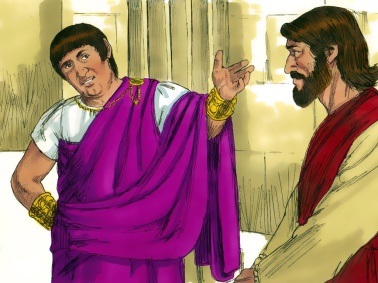
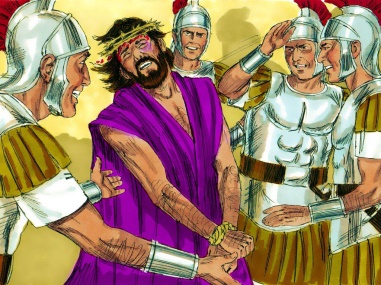
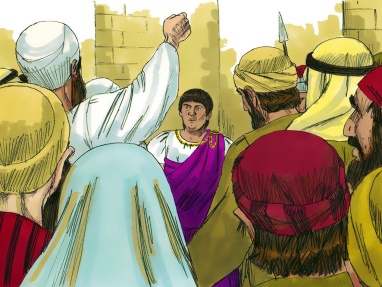
Jesus was arrested at around midnight in the Garden of Gethsemane, and, remarkably, was made to face six separate hearings before He was crucified the following noon. He was first taken to Annas, a former high priest who held no formal office by this time, but who still commanded such respect that Jesus was brought to him first, before the real proceedings could begin. From Annas, He was sent on to Caiaphas, the high priest then in office, who questioned Him privately before the full council, the Sanhedrin, could be convened. Before this council — a body with sweeping legislative, judicial, and religious authority over Jewish life, bound by its own strict rules of procedure — Jesus was formally tried a third time. Since the Sanhedrin itself had no power to carry out an execution, He was sent, a fourth time, to Pontius Pilate, the Roman governor, who found no substance in the religious charge of blasphemy brought against Him, and, learning that Jesus was a Galilean, sent Him on, a fifth time, to Herod, the ruler of Galilee, who happened to be in Jerusalem at the time. Herod questioned Jesus at length but received no answer, and sent Him back to Pilate a sixth and final time. Pilate again tried to spare Jesus, offering to release Him as the customary act of clemency at the feast, but the crowd demanded the release of Barabbas instead, and Pilate, yielding to their demand, handed Jesus over to be crucified.
Jesus on Trial, Continued
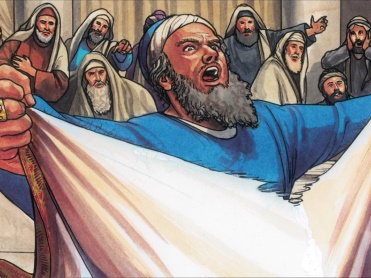
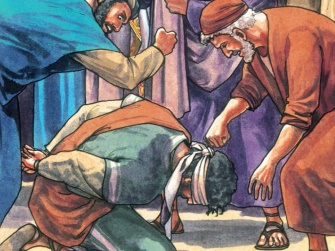
“And they that had laid hold on Jesus led him away to Caiaphas the high priest, where the scribes and the elders were assembled. But Peter followed him afar off unto the high priest’s palace, and went in, and sat with the servants, to see the end. Now the chief priests, and elders, and all the council, sought false witness against Jesus, to put him to death; but found none: yea, though many false witnesses came, yet found they none. At the last came two false witnesses, and said, “This fellow said, I am able to destroy the temple of God, and to build it in three days.” And the high priest arose, and said unto him, “Answerest thou nothing? what is it which these witness against thee?” But Jesus held his peace. And the high priest answered and said unto him, “I adjure thee by the living God, that thou tell us whether thou be the Christ, the Son of God.” Jesus saith unto him, “Thou hast said: nevertheless I say unto you, Hereafter shall ye see the Son of man sitting on the right hand of power, and coming in the clouds of heaven.” Then the high priest rent his clothes, saying, “He hath spoken blasphemy; what further need have we of witnesses? behold, now ye have heard his blasphemy. What think ye?” They answered and said, “He is guilty of death.” Then did they spit in his face, and buffeted him; and others smote him with the palms of their hands, saying, “Prophesy unto us, thou Christ, Who is he that smote thee?”” — Matthew 26:57–68 (KJV)
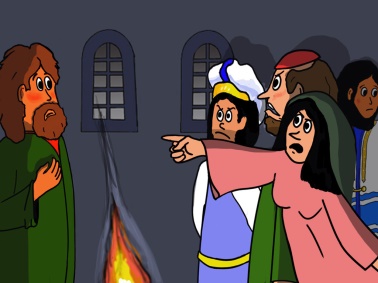

Jesus was first taken to the house of Annas, father-in-law of the high priest Caiaphas, where the chief priests had gathered. John was able to go in with Him, but Peter remained outside in the courtyard among the servants, where he denied being one of His followers three times, as had been foretold. During His questioning, Jesus was asked about His teaching, and was struck across the face for the manner of His answer to the high priest. Annas then had Him bound and sent to Caiaphas, who asked Him directly whether He was the Son of God; Jesus answered that He was. He was then sent on to Pontius Pilate and accused of treason against Rome, but Pilate could find no fault in Him, and wished to release Him. At the urging of the chief priests, the crowd shouted for Him to be crucified instead.
The End of the Trial of Jesus
“Now Jesus stood before the governor: and the governor asked him, saying, “Art thou the King of the Jews?” And Jesus said unto him, “Thou sayest.” And when he was accused of the chief priests and elders, he answered nothing. Then said Pilate unto him, “Hearest thou not how many things they witness against thee?” And he answered him to never a word; insomuch that the governor marvelled greatly. Now at that feast the governor was wont to release unto the people a prisoner, whom they would. And they had then a notable prisoner, called Barabbas. Therefore when they were gathered together, Pilate said unto them, “Whom will ye that I release unto you? Barabbas, or Jesus which is called Christ?” For he knew that for envy they had delivered him. When he was set down on the judgment seat, his wife sent unto him, saying, “Have thou nothing to do with that just man: for I have suffered many things this day in a dream because of him.” But the chief priests and elders persuaded the multitude that they should ask Barabbas, and destroy Jesus. The governor answered and said unto them, “Whether of the twain will ye that I release unto you?” They said, “Barabbas.” Pilate saith unto them, “What shall I do then with Jesus which is called Christ?” They all say unto him, “Let him be crucified.” And the governor said, “Why, what evil hath he done?” But they cried out the more, saying, “Let him be crucified.” When Pilate saw that he could prevail nothing, but that rather a tumult was made, he took water, and washed his hands before the multitude, saying, “I am innocent of the blood of this just person: see ye to it.”” — Matthew 27:11–24 (KJV)
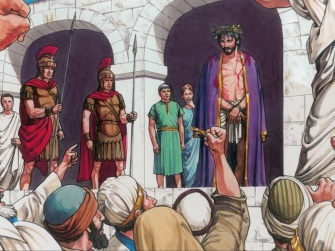
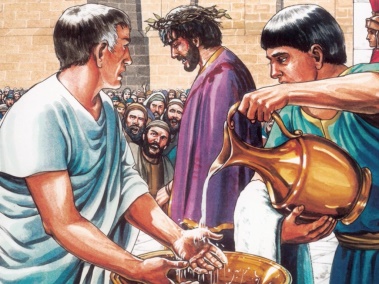
Pilate had sent Jesus on to Herod, who was glad to see Him, having long wished to witness one of His miracles; but Herod, having no authority to condemn a man to death, sent Him back to Pilate, not before his soldiers had mocked and scourged Him. Pilate again offered to punish Jesus and then release Him, as it was customary to free one prisoner at the time of the feast, but the crowd called instead for Barabbas to be set free. Jesus was whipped, a crown of thorns was forced onto His head, and He was mocked and spat upon.
The Journey to the Cross
“And when they had mocked him, they took off the purple from him, and put his own clothes on him, and led him out to crucify him. And they compel one Simon a Cyrenian, who passed by, coming out of the country, the father of Alexander and Rufus, to bear his cross. And they bring him unto the place Golgotha, which is, being interpreted, “The place of a skull.” And they gave him to drink wine mingled with myrrh: but he received it not.” — Mark 15:20–23 (KJV)
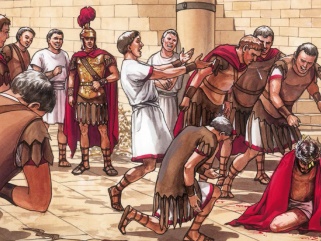
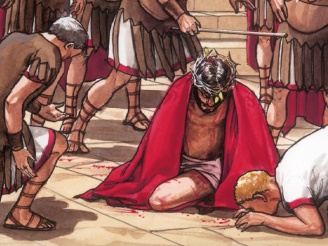
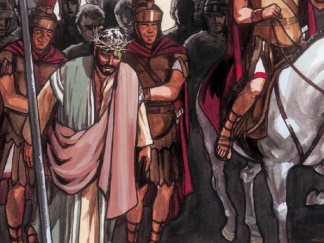
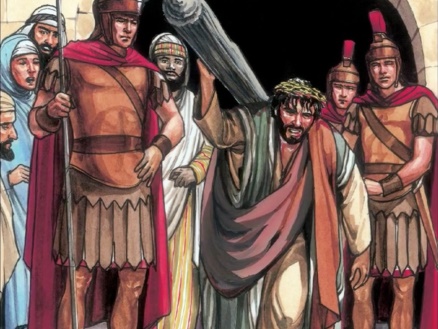
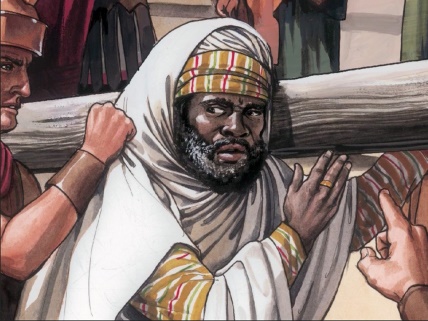
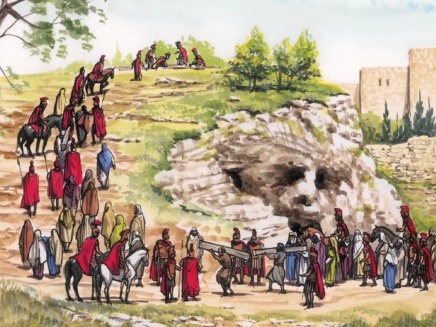
As the soldiers led Jesus away to be crucified, they laid hold of a man coming in from the countryside, Simon, from Cyrene in North Africa, and compelled him to carry the cross behind Jesus for the rest of the way — Jesus, already weakened by the scourging and mockery He had endured, was evidently unable to carry it the whole distance Himself. A great crowd followed, among them many women who mourned and wept for Him. Jesus turned to them and said, “Daughters of Jerusalem, weep not for me, but weep for yourselves, and for your children.” He went on to speak of days to come so terrible that people would count the barren blessed, and would beg the mountains to fall on them and the hills to cover them, rather than face what was coming. “For if they do these things in a green tree,” He said, “what shall be done in the dry?” Even on the way to His own crucifixion, Jesus turned His thoughts from His own suffering to warn of the far greater judgement still to come upon Jerusalem.
The Crucifixion and Burial
“And the superscription of his accusation was written over, THE KING OF THE JEWS. And with him they crucify two thieves; the one on his right hand, and the other on his left. And the scripture was fulfilled, which saith, And he was numbered with the transgressors. And they that passed by railed on him, wagging their heads, and saying, “Ah, thou that destroyest the temple, and buildest it in three days, save thyself, and come down from the cross.” Likewise also the chief priests mocking said among themselves with the scribes, “He saved others; himself he cannot save. Let Christ the King of Israel descend now from the cross, that we may see and believe.” And they that were crucified with him reviled him. And when the sixth hour was come, there was darkness over the whole land until the ninth hour. And at the ninth hour Jesus cried with a loud voice, saying, “Eloi, Eloi, lama sabachthani?” which is, being interpreted, “My God, my God, why hast thou forsaken me?” And some of them that stood by, when they heard it, said, “Behold, he calleth Elias.” And one ran and filled a spunge full of vinegar, and put it on a reed, and gave him to drink, saying, “Let alone; let us see whether Elias will come to take him down.” And Jesus cried with a loud voice, and gave up the ghost.” — Mark 15:26–37 (KJV)
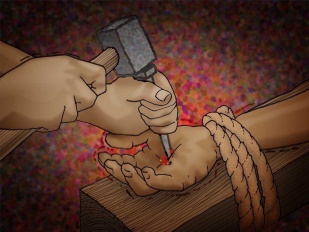
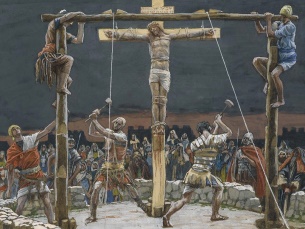
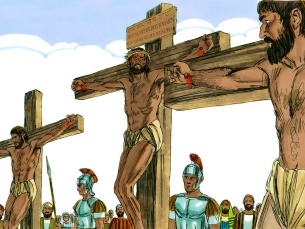
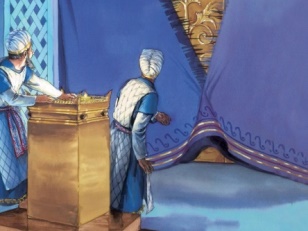
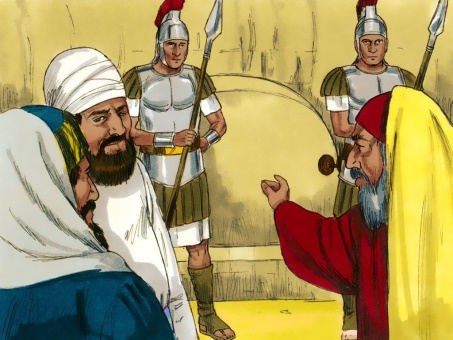
On reaching Golgotha, Jesus was crucified between two criminals, and above His head was placed an inscription reading, “THE KING OF THE JEWS.” “Father, forgive them; for they know not what they do” was the first of the seven things Jesus said as He hung on the cross. The other six were: to one of the criminals crucified beside Him, who acknowledged Him, “Verily I say unto thee, To day shalt thou be with me in paradise”; to His mother, “Woman, behold thy son!”, and to the disciple He loved, “Behold thy mother!”; “My God, my God, why hast thou forsaken me?”; “I thirst”; “It is finished”; and finally, “Father, into thy hands I commend my spirit.” A soldier pierced His side with a spear, once it was seen that He had already died. At about the sixth hour, a great darkness fell over the land, and an earthquake shook the earth, as Jesus breathed His last. He died for you and me — for all humanity.
The Seven Sayings of Jesus from the Cross
“And they that passed by reviled him, wagging their heads, and saying, “Thou that destroyest the temple, and buildest it in three days, save thyself. If thou be the Son of God, come down from the cross.” Likewise also the chief priests mocking him, with the scribes and elders, said, “He saved others; himself he cannot save. If he be the King of Israel, let him now come down from the cross, and we will believe him. He trusted in God; let him deliver him now, if he will have him: for he said, I am the Son of God.” The thieves also, which were crucified with him, cast the same in his teeth. Now from the sixth hour there was darkness over all the land unto the ninth hour. And about the ninth hour Jesus cried with a loud voice, saying, “Eli, Eli, lama sabachthani?” that is to say, “My God, my God, why hast thou forsaken me?” Some of them that stood there, when they heard that, said, “This man calleth for Elias.” And straightway one of them ran, and took a spunge, and filled it with vinegar, and put it on a reed, and gave him to drink. The rest said, “Let be, let us see whether Elias will come to save him.” Jesus, when he had cried again with a loud voice, yielded up the ghost.” — Matthew 27:39–50 (KJV)
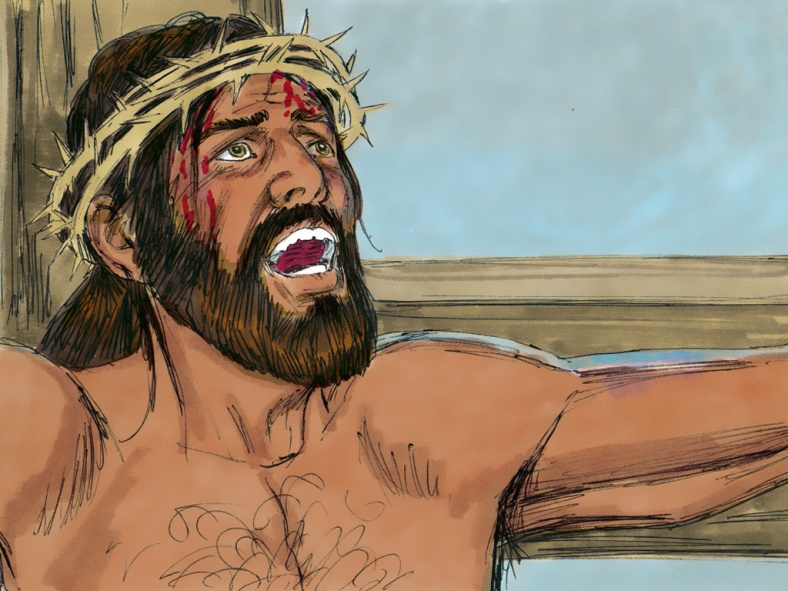
Jesus spoke seven times from the cross; these are known as the Seven Sayings from the Cross, and are expounded almost every year during Good Friday services:
- “Father, forgive them; for they know not what they do.” — Luke 23:34
- “Verily I say unto thee, To day shalt thou be with me in paradise.” — Luke 23:43
- “Woman, behold thy son!” ... “Behold thy mother!” — John 19:26-27
- “My God, my God, why hast thou forsaken me?” — Matthew 27:46; Mark 15:34
- “I thirst.” — John 19:28
- “It is finished.” — John 19:30
- “Father, into thy hands I commend my spirit!” — Luke 23:46