Jesus Picks His Disciples
“From that time Jesus began to preach, and to say, “Repent: for the kingdom of heaven is at hand.” And Jesus, walking by the sea of Galilee, saw two brethren, Simon called Peter, and Andrew his brother, casting a net into the sea: for they were fishers. And he saith unto them, “Follow me, and I will make you fishers of men.” And they straightway left their nets, and followed him.” — Matthew 4:17–20 (KJV)
“And as Jesus passed forth from thence, he saw a man, named Matthew, sitting at the receipt of custom: and he saith unto him, “Follow me.” And he arose, and followed him.” — Matthew 9:9 (KJV)
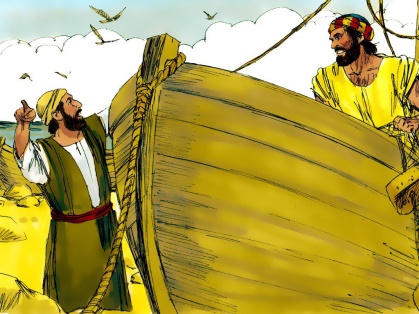
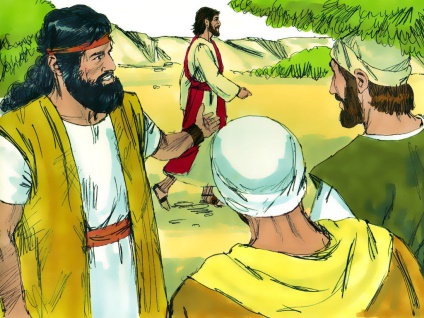
Jesus began His ministry by urging people to be prepared for the Kingdom of God, which He said was at hand. One day, as He was walking along the Sea of Galilee, He saw Simon and his brother Andrew, both fishermen, tending their fishing nets. He invited them to join Him, and they dropped everything and followed Him. In the same way, He called James and John, both fishermen, and they too joined Him without asking any questions. As He continued His travels and His ministry, He made eight more very ordinary people, from diverse walks of life, His disciples. While Jesus had a very large following, these twelve disciples were with Him at all times. They probably did not understand who Jesus was at that time, but accepted Him as their master.
The Calling of Matthew the Tax Collector
“And he went forth again by the sea side; and all the multitude resorted unto him, and he taught them. And as he passed by, he saw Levi the son of Alphaeus sitting at the receipt of custom, and said unto him, “Follow me.” And he arose and followed him.” — Mark 2:13–14 (KJV)
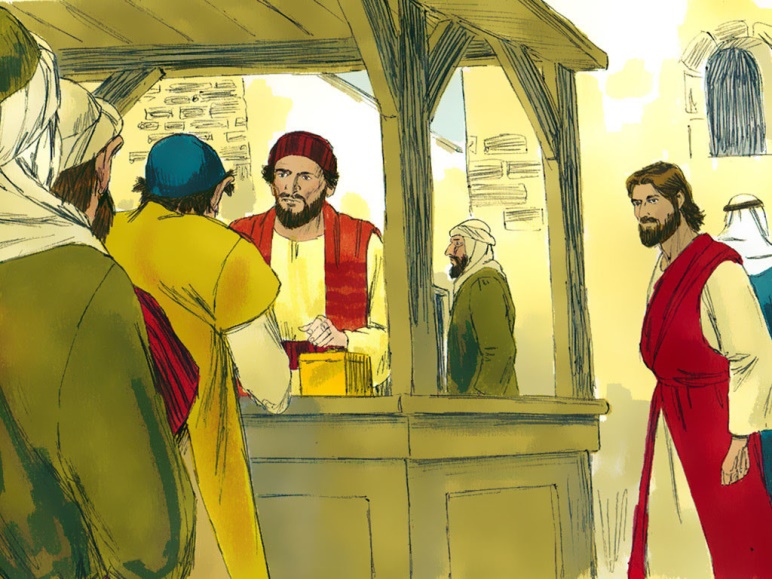
One day, when Jesus was walking by the sea, He saw a tax collector called Matthew Levi, who was busy collecting taxes from people and doing very well in his business, many times cheating people by overcharging them and keeping the extra money for himself. Since tax collectors worked for the Roman Empire, and often cheated people, they were hated by all. Jesus approached Matthew and asked him to follow Him, and Matthew gave up his lucrative business, dropped everything, and followed Jesus.
The Cleansing of the Temple
“And they come to Jerusalem: and Jesus went into the temple, and began to cast out them that sold and bought in the temple, and overthrew the tables of the moneychangers, and the seats of them that sold doves; and would not suffer that any man should carry any vessel through the temple. And he taught, saying unto them, “Is it not written, My house shall be called of all nations the house of prayer? but ye have made it a den of thieves.” And the scribes and chief priests heard it, and sought how they might destroy him: for they feared him, because all the people was astonished at his doctrine.” — Mark 11:15–18 (KJV)
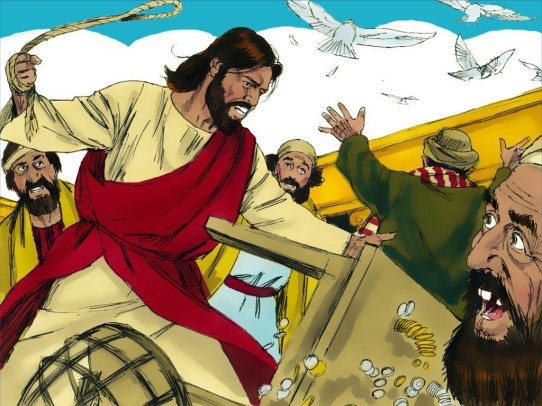
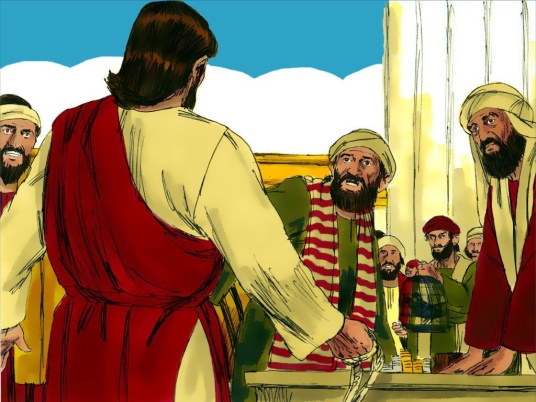
Perhaps this was a precursor to His ministry on this earth. He began to travel through the entire region, teaching, preaching, and healing people. When the Passover of the Jews was nearing, Jesus went to Jerusalem and entered the Temple, to find the outer area set aside for Gentiles to worship, known as the Court of the Gentiles, occupied by money changers and traders in birds, animals, and other items for sacrifice.
The cleansing of the Temple agitated the Jews. They confronted Jesus, questioning His authority to do what He did, and wanted to see a miracle or sign as evidence of His divinity. Jesus told them that if they destroyed the Temple, He would raise it up again in three days. Subtly, Jesus was referring to His death and His resurrection on the third day. The Jews did not understand what He was saying, and used this statement as an accusation against Him much later, when they put Him on trial.
Jesus Teaches Nicodemus — a Unique Encounter
“There was a man of the Pharisees, named Nicodemus, a ruler of the Jews: the same came to Jesus by night, and said unto him, “Rabbi, we know that thou art a teacher come from God: for no man can do these miracles that thou doest, except God be with him.” Jesus answered and said unto him, “Verily, verily, I say unto thee, Except a man be born again, he cannot see the kingdom of God.” Nicodemus saith unto him, “How can a man be born when he is old? can he enter the second time into his mother’s womb, and be born?” Jesus answered, “Verily, verily, I say unto thee, Except a man be born of water and of the Spirit, he cannot enter into the kingdom of God. That which is born of the flesh is flesh; and that which is born of the Spirit is spirit. Marvel not that I said unto thee, Ye must be born again.”” — John 3:1–7 (KJV)

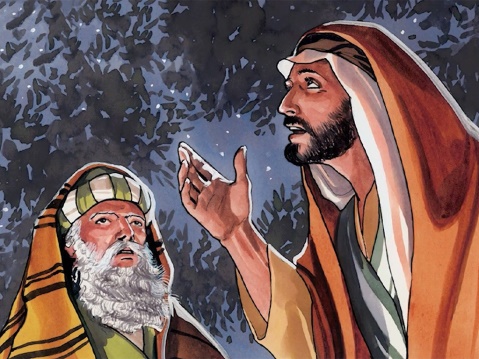
Though the chief priests and the scribes were becoming progressively hostile to Jesus, many secretly believed in His teaching. Nicodemus, a very prominent Pharisee, one of the rulers of the Jews and a learned man, was one of them. Not wanting to acknowledge Jesus publicly, lest his position in society be compromised, he came to meet Jesus one night. In answer to a question from Nicodemus, Jesus said that unless a person is born again, he cannot enter the Kingdom of God. By this, Jesus meant putting to death all sin, being born again as a new person, and living in obedience to God.
Jesus and the Samaritan Woman
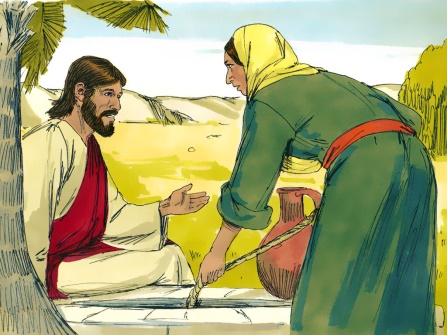
“There cometh a woman of Samaria to draw water: Jesus saith unto her, “Give me to drink.” (For his disciples were gone away unto the city to buy meat.) Then saith the woman of Samaria unto him, “How is it that thou, being a Jew, askest drink of me, which am a woman of Samaria? for the Jews have no dealings with the Samaritans.” Jesus answered and said unto her, “If thou knewest the gift of God, and who it is that saith to thee, Give me to drink; thou wouldest have asked of him, and he would have given thee living water.” ... Jesus answered and said unto her, “Whosoever drinketh of this water shall thirst again: but whosoever drinketh of the water that I shall give him shall never thirst; but the water that I shall give him shall be in him a well of water springing up into everlasting life.”” — John 4:7–10, 13–14 (KJV)
The Living Water
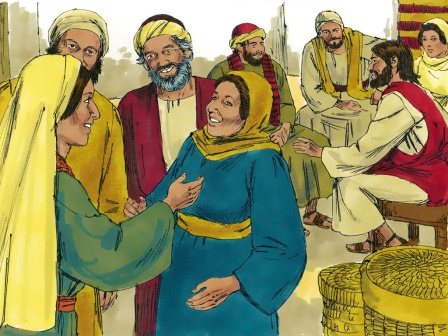
Jesus travelled to Judaea, and His disciples baptised a very large number of people. The Pharisees were displeased to hear of Jesus’ growing popularity, and might have caused Him harm; therefore, to avoid them, Jesus left Judaea and travelled through Samaria. The Jews were hostile to the Samaritans, and considered them an unworthy community. Jesus reached Jacob’s Well and sat by it to rest. A Samaritan woman came to draw water, and Jesus asked her for a drink. In those days, it was not common for a stranger to speak to a woman, and especially not a Jew to a Samaritan. Jesus told her that He could give her “living water,” meaning everlasting life. He also told her about her past. The woman, who had addressed Him at first as “Sir,” progressively acknowledged Him as a prophet, and finally as the Messiah, the Christ. God indeed is the God of the entire human race!